
Home / Blog / Retrofit vs Full-Frame Windows
Retrofit vs Full-Frame Windows: Which One Fits Your Los Angeles Home?
Every window quote in LA comes down to one choice: slip the new window into the old frame, or tear the old frame out to the studs. On a stucco house, that choice decides if your walls get cut, how much glass you keep and how long the job takes. Check each opening against the tests below and you’ll know which method it needs before the contractor arrives.
Want someone to check your frames? Call (424) 230-8336 for a free in-home measurement.
- Free quotes
- Serving 10 LA areas
- Independent local contractors
Free quoteFrom a local contractor
What’s the Difference Between Retrofit and Full-Frame?
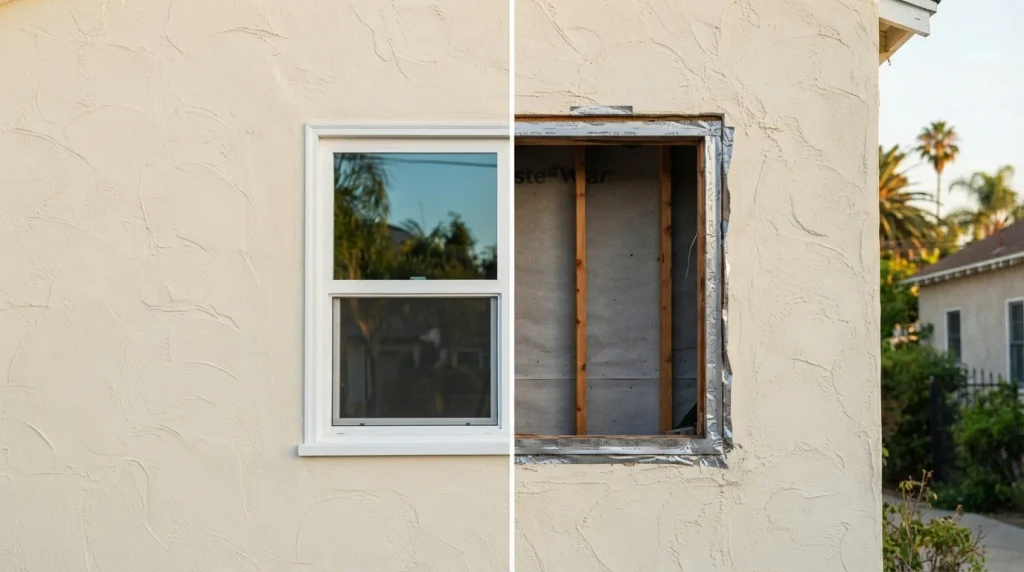
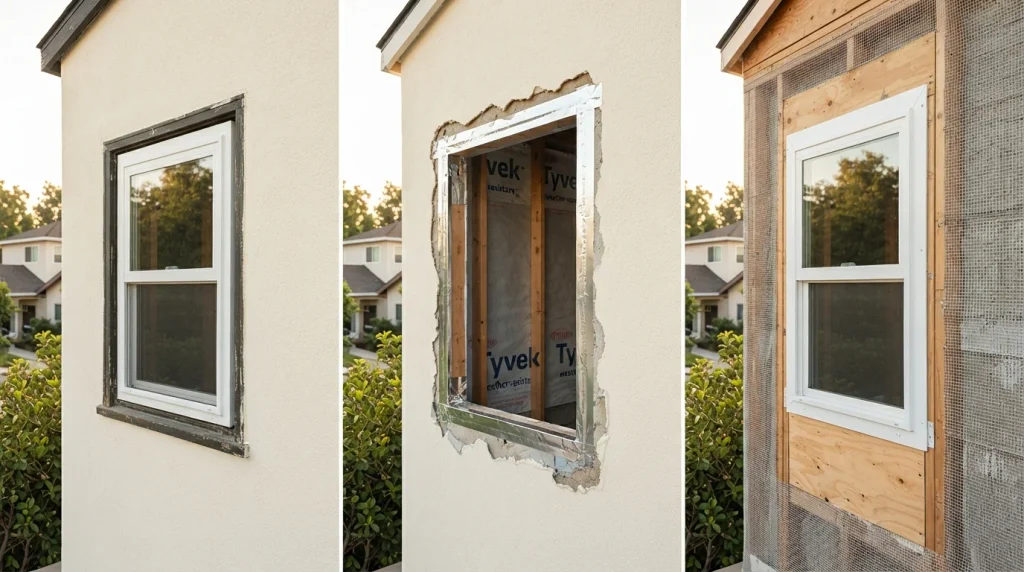
A retrofit window, also called an insert or pocket replacement, goes inside the existing frame. The old sashes and glass come out, the frame stays, and the new window is anchored, sealed and trimmed over it.
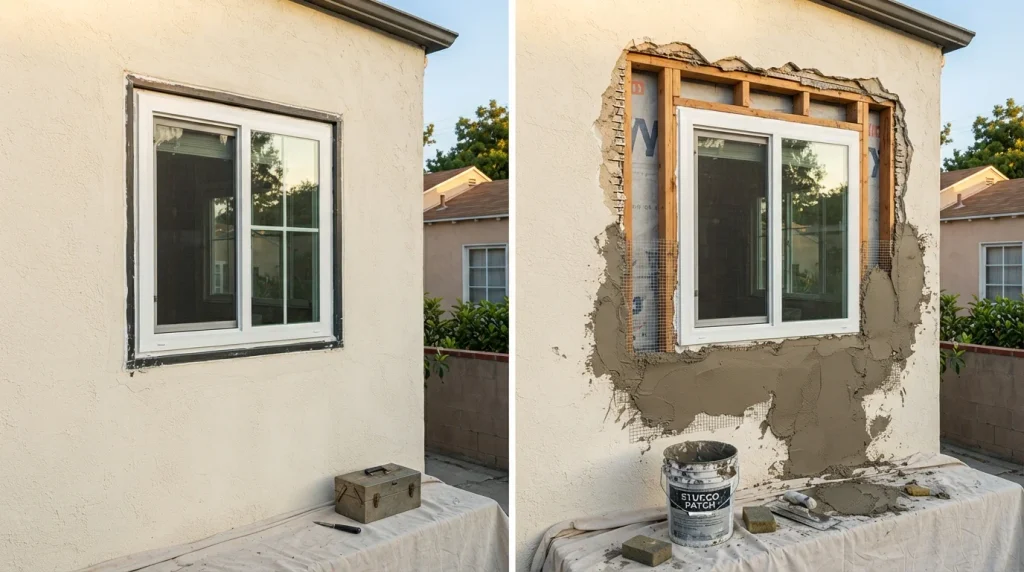
A full-frame replacement removes the whole window, frame and all, down to the studs. The new window goes into the bare opening with new flashing, and the wall around it gets patched.
A third type, the nail-fin window, is built for new openings, additions and fire rebuilds. That’s a separate job, covered on our new construction windows page.
How Do You Know Which One Each Window Needs?
You don’t have to pick one method for the whole house. Marvin notes that different windows in the same home can take different methods, some insert and some full-frame (Marvin). Run each opening through these checks.
01
Is the Old Frame Straight?
Measure the frame corner to corner in both directions. If the two numbers don’t match, the frame is out of square, and a new window set inside it will be crooked too. Houses that shifted in an earthquake or settled on a hillside show this most.
02
Is the Frame Dry and Solid?
Press a screwdriver into the sill and the bottom corners. Soft wood, flaking metal or a sill that gives under your thumb means the frame can’t hold a new window. Water stains on the drywall below the window mean water is already inside the wall, and a retrofit covers it up instead of fixing it.
03
What Is the Old Frame Made Of?
Original aluminum frames on 1950s to 1970s homes across the Valley and South Bay are the classic retrofit candidate, as long as they’re straight and dry. Old vinyl is another matter. Marvin says insert replacement is rarely an option for vinyl windows, because vinyl frames lack the strength to support a new unit. If your 1990s vinyl windows are failing, plan on full-frame.
04
Are You Changing the Size or Style?
A bigger opening, a lower sill, or a slider turned into a casement all need full-frame work. A retrofit keeps the old opening exactly as it is.
What Changes on a Stucco House?
Stucco walls are where the two methods split the most.
| Retrofit | Full-frame | |
|---|---|---|
| Stucco around the window | Left alone | Cut back, then patched |
| Flashing and sill pan | Sealed to the old frame | New flashing and sill pan against the framing |
| Paint | No exterior paint needed | Patches need paint, and color matching is part of the job |
| Interior drywall and trim | New trim covers the edges | Drywall or plaster repair where it’s disturbed |
| Hidden damage | Stays hidden | Found and fixed while the wall is open |
A retrofit uses a flush-fin frame that laps over the old frame on the outside, so the stucco never gets touched. That’s why retrofits go faster on occupied homes. Full-frame is the only way to see and repair rot or failed flashing behind the stucco.
How Much Glass Do You Lose With a Retrofit?
Some. The new frame sits inside the old one, so the glass shrinks by the width of the new frame on every side. Clera Windows describes the retrofit glass area as slightly smaller than a full-frame window’s (Clera). You’ll notice it more on small windows and casements than on wide sliders.
Bedrooms need a second look. Every sleeping room needs an emergency escape opening, and LADBS lists the minimum as 5.7 square feet of clear opening, at least 24 inches high and 20 inches wide. If a retrofit would shrink a bedroom window below that, ask for full-frame on that opening. Our egress windows page explains how to measure.
Which Costs More, and Which Takes Longer?
Full-frame costs more, because of the tear-out and wall repair. Clera puts full-frame at about 15% to 20% more than retrofit. On LA stucco, stucco patching and paint add to that gap, so compare line items as well as totals. Per-window retrofit prices in LA are on our retrofit windows page.
Time follows the same pattern. A retrofit install takes one to two days for most houses. Full-frame takes longer per opening, and stucco patches need time to cure before paint.
Which Rules Apply to Both Methods?
01
Permits and the Energy Code
Both methods need a permit in the City of LA and the other cities we cover, and both must meet the same Title 24 ratings: a U-factor of 0.30 and an SHGC of 0.23. See window replacement permits in Los Angeles.
LA County, which issues permits for Altadena and other unincorporated areas, adds a rule of its own. Its residential guide allows a retrofit only in an existing approved opening with a framed, weathertight assembly.
02
Lead Paint in Pre-1978 Homes
Retrofit doesn’t get you out of lead rules. The EPA says replacing any size window is a renovation, not minor repair (EPA). In a home built before 1978, both methods need a contractor certified for lead-safe work.
03
Historic Districts and Fire Zones
In Pasadena’s landmark districts and Long Beach’s historic districts, street-facing window changes go through design review first. Ask how the new frame width will look from the street before you apply. See historic window restoration for options that keep original frames. Fire rebuilds in the Palisades and Altadena start from bare framing, so they use new construction windows, not either method here.
So Which Should You Choose?
| Your situation | Best fit |
|---|---|
| Original aluminum frames, straight and dry, stucco walls | Retrofit |
| Water stains, soft sills or rot at the frame | Full-frame |
| Failing vinyl windows from the 1990s or 2000s | Full-frame |
| Bigger window, new style or window to door | Full-frame |
| Bedroom window that would drop below egress size | Full-frame |
| Tight budget, sound frames, no size change | Retrofit |
Retrofit vs Full-Frame FAQs
Can You Use Both Methods in the Same House?
Yes, and it’s a smart way to split the budget. Sound aluminum frames get retrofits, and the one leaking window over the kitchen sink gets full-frame work. Ask for the quote to list the method for each window.
Does a Retrofit Fix Drafts Around the Old Frame?
Only partly. The new window seals tight, but Marvin notes that air leaks already in the original frame can remain, since that frame stays in the wall. A good installer foams and seals the gap between the old frame and the new one.
Get Your Windows Checked: Call (424) 230-8336
PaneRight LA connects Los Angeles homeowners with independent local window contractors who measure each opening and quote retrofit, full-frame or both. The contractor sets the price and method, so check their license with the Contractors State License Board before you sign. Calls may be recorded.
Call (424) 230-8336 or request a free quote(/free-quote/).
PaneRight LA is an advertising and referral service, not a contractor. We connect you with independent local window contractors who may pay us for referrals. Calls may be recorded.